Products | Brinzia
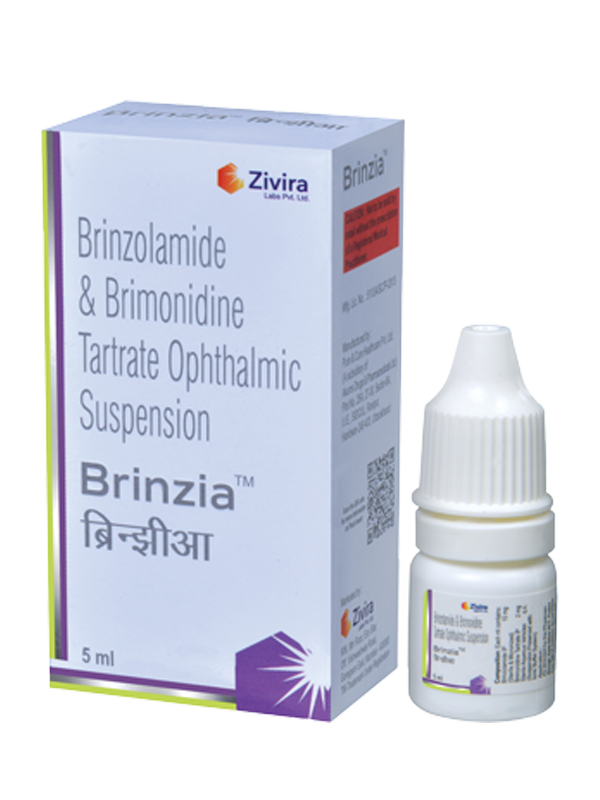
5ML
Brinzia
Brinzolamide & Brimonidine Tartrate Ophthalmic Suspension
It is indicated for the reduction of elevated intraocular pressure (IOP) in patients with open-angle glaucoma or ocular hypertension.
Generic Name:
Brinzolamide & Brimonidine Tartrate Ophthalmic Suspension.
Qualitative and Quantitative Composition:
Each ml contains:
Brinzolamide IP 10 mg (Sterile & Micronized)
Brimonidine Tartrate IP 2 mg
Sterile Aqueous Vehicles q.s. (Suspension Preserved with Ionic Buffer System)
Dosage Form and Strength:
Ophthalmic suspension
Brinzolamide 10 mg/ml
Brimonidine 2 mg/ml
Therapeutic Indications:
It is indicated for the reduction of elevated intraocular pressure (IOP) in patients with open-angle glaucoma or ocular hypertension.
Posology and Method of Administration:
Posology
Use in adults, including the elderly:
The recommended dose is one drop of Brinzolamide/Brimonidine in the affected eye(s) 2-3 times daily or as directed by the Physician.
Missed dose: If a dose is missed, treatment should be continued with the next dose as planned.
Hepatic and/or renal impairment:
Brinzolamide/Brimonidine has not been studied in patients with hepatic impairment and caution is therefore recommended in this population.
Brinzolamide/Brimonidine has not been studied in patients with severe renal impairment (CrCl < 30 mL/min) or in patients with hyperchloraemic acidosis. Since the brinzolamide component of Brinzolamide/Brimonidine and its metabolite are excreted predominantly by the kidney, Brinzolamide/Brimonidine is contraindicated in such patients.
Paediatric population:
The safety and efficacy of Brinzolamide/Brimonidine in children and adolescents aged 2 to 17 years have not been established. No data are available. Brinzolamide/Brimonidine is contraindicated in neonates and infants aged less than 2 years in the decrease of elevated intraocular pressure (IOP) with open-angle glaucoma or ocular hypertension for whom monotherapy provides insufficient IOP reduction because of safety concerns.
Method of administration: For ocular use only.
Patients should be instructed to shake the bottle well before use. When nasolacrimal occlusion is used and the eyelids are closed for 2 minutes, systemic absorption is reduced. This may result in a decrease in systemic side effects and an increase in local activity. To prevent contamination of the dropper tip and suspension, care must be taken not to touch the eyelids, surrounding areas or other surfaces with the dropper tip of the bottle. Patients should be instructed to keep the bottle tightly closed when not in use. Brinzolamide/Brimonidine may be used concomitantly with other topical ophthalmic medicinal products to lower intraocular pressure. If more than one topical ophthalmic medicinal product is being used, the medicinal products must be administered at least 5 minutes apart.
Contraindications:
It is contraindicated in patients with known hypersensitivity to the active substance(s) or to any of the excipients.
- Hypersensitivity to sulphonamides.
- Patients receiving monoamine oxidase (MAO) inhibitor therapy.
- Patients on antidepressants which affect noradrenergic transmission (e.g. tricyclic antidepressants and mianserin).
- Patients with severe renal impairment.
- Patients with hyperchloraemic acidosis.
- Neonates and infants under the age of 2 years.
Description:
Brinzolamide/Brimonidine tartrate ophthalmic suspension is a fixed combination of a carbonic anhydrase inhibitor and an alpha 2 adrenergic receptor agonist.
Brinzolamide is described chemically as: (R)-(+)-4-Ethylamino-2-(3-methoxypropyl)-3,4-dihydro-2H-thieno[3,2-e]-1,2-thiazine-6-sulfonamide-1,1-dioxide. Its empirical formula is C12H21N3O5S3. Brinzolamide has a molecular weight of 383.5. It is a white powder, which is insoluble in water, very soluble in methanol and soluble in ethanol.
Brimonidine tartrate is described chemically as: 5-bromo-6-(2-imidazolin-2-ylamino) quinoxaline L-tartrate. Its empirical formula is C11H10BrN5 · C4H6O6. Brimonidine tartrate has a molecular weight of 442.2. It is a white to yellow powder that is soluble in water (34 mg/mL) at pH 6.5.
Brinzolamide/Brimonidine tartrate ophthalmic suspension is supplied as a sterile, aqueous suspension which has been formulated to be readily suspended following shaking.
Each mL of Brinzolamide/Brimonidine tartrate ophthalmic suspension contains: Active ingredients: Brinzolamide 10 mg, Brimonidine Tartrate 2 mg.
Pharmaceutical Particulars:
Incompatibilities: NA
Shelf life: As per carton
Packaging information: Available in the 5ml pack.
Storage and handling instructions: Keep below 25°C. Protect from light & moisture. Do not freeze.
Keep out of reach of children. For External use only, Not for injection.
Special Warnings and Precautions for Use:
The medicinal product should not be injected. Patients should be instructed not to swallow Brinzolamide/Brimonidine eye drops.
Ocular effects
Brinzolamide/Brimonidine has not been studied in patients with narrow-angle glaucoma and its use is not recommended in these patients. The possible effect of brinzolamide on corneal endothelial function has not been investigated in patients with compromised corneas (particularly in patients with low endothelial cell count). Specifically, patients wearing contact lenses have not been studied and careful monitoring of these patients when using brinzolamide is recommended, since carbonic anhydrase inhibitors may affect corneal hydration and wearing contact lenses might increase the risk for the cornea. Careful monitoring of patients with compromised corneas, such as patients with diabetes mellitus or corneal dystrophies, is recommended. Brimonidine tartrate may cause ocular allergic reactions. If allergic reactions are observed, treatment should be discontinued. Delayed ocular hypersensitivity reactions have been reported with brimonidine tartrate, with some reported to be associated with an increase in IOP. The potential effects following cessation of treatment with Brinzolamide/Brimonidine have not been studied. While the duration of IOP-lowering effect for Brinzolamide/Brimonidine has not been studied, the IOP-lowering effect of brinzolamide is expected to last for 5-7 days. The IOP-lowering effect of brimonidine may be longer.
Systemic effects
Brinzolamide/Brimonidine contains brinzolamide, a sulphonamide inhibitor of carbonic anhydrase and, although administered topically, is absorbed systemically. The same types of adverse reactions that are attributable to sulphonamides may occur with topical administration. If signs of serious reactions or hypersensitivity occur, the use of this medicinal product should be discontinued.
Cardiac disorders
Following administration of Brinzolamide/Brimonidine, small decreases in blood pressure were observed in some patients. Caution is advised when using medicinal products such as antihypertensives and/or cardiac glycosides concomitantly with Brinzolamide/Brimonidine or in patients with severe or unstable and uncontrolled cardiovascular disease. Brinzolamide/Brimonidine should be used with caution in patients with depression, cerebral or coronary insufficiency, Raynaud's phenomenon, orthostatic hypotension or thromboangiitis obliterans.
Acid/base disturbances
Acid-base disturbances have been reported with oral carbonic anhydrase inhibitors. Brinzolamide/Brimonidine contains brinzolamide, an inhibitor of carbonic anhydrase, and although administered topically, is absorbed systemically. The same types of adverse reactions that are attributable to oral carbonic anhydrase inhibitors (i.e. acid-base disturbances) may occur with topical administration. Brinzolamide/Brimonidine should be used with caution in patients with risk of renal impairment because of the possible risk of metabolic acidosis. Brinzolamide/Brimonidine is contraindicated in patients with severe renal impairment.
Hepatic impairment
Brinzolamide/Brimonidine has not been studied in patients with hepatic impairment; caution should be used in treating such patients.
Mental alertness
Oral carbonic anhydrase inhibitors may impair the ability to perform tasks requiring mental alertness and/or physical coordination in elderly patients. Brinzolamide/Brimonidine is absorbed systemically and this may therefore occur with topical administration.
Paediatric population
The safety and efficacy of Brinzolamide/Brimonidine in children and adolescents aged 2 to 17 years have not been established. Symptoms of brimonidine overdose (including loss of consciousness, hypotension, hypotonia, bradycardia, hypothermia, cyanosis and apnoea) have been reported in neonates and infants receiving brimonidine eye drops as part of medical treatment of congenital glaucoma. Brinzolamide/Brimonidine is therefore contraindicated in children below 2 years of age. Treatment of children 2 years and above (especially those in the 2-7 age range and/or weighing <20 kg) is not recommended because of the potential for central nervous system-related side effects.
Drugs Interactions:
No specific drug interaction studies have been performed with Brinzolamide/Brimonidine. Brinzolamide/Brimonidine is contraindicated in patients receiving monoamine oxidase inhibitors and in patients on antidepressants which affect noradrenergic transmission (e.g. tricyclic antidepressants and mianserin). Tricyclic antidepressants may blunt the ocular hypotensive response of brimonidine tartrate. Caution is advised due to the possibility of an additive or potentiating effect with CNS depressants (e.g. alcohol, barbiturates, opiates, sedatives or anaesthetics). No data on the level of circulating catecholamines after Brinzolamide/Brimonidine administration are available. However, caution is advised in patients taking medicinal products which can affect the metabolism and uptake of circulating amines (e.g. chlorpromazine, methylphenidate, reserpine, serotonin-norepinephrine reuptake inhibitors). Alpha adrenergic agonists (e.g. brimonidine tartrate), as a class, may reduce pulse and blood pressure. Following administration of Brinzolamide/Brimonidine, small decreases in blood pressure were observed in some patients. Caution is advised when using medicinal products such as antihypertensives and/or cardiac glycosides with Brinzolamide/Brimonidine. Caution is advised when initiating (or changing the dose of) concomitant systemic medicinal products (irrespective of pharmaceutical form) which may interact with alpha-adrenergic agonists or interfere with their activity, i.e. agonists or antagonists of the adrenergic receptor (e.g. isoprenaline, prazosin).
Brinzolamide is a carbonic anhydrase inhibitor and, although administered topically, is absorbed systemically. Acid-base disturbances have been reported with oral carbonic anhydrase inhibitors. The potential for interactions must be considered in patients receiving Brinzolamide/Brimonidine. There is a potential for an additive effect on the known systemic effects of carbonic anhydrase inhibition in patients receiving an oral carbonic anhydrase inhibitor and topical brinzolamide. The concomitant administration of Brinzolamide/Brimonidine and oral carbonic anhydrase inhibitors is not recommended.
The cytochrome P-450 isozymes responsible for metabolism of brinzolamide include CYP3A4 (main), CYP2A6, CYP2B6, CYP2C8 and CYP2C9. It is expected that inhibitors of CYP3A4 such as ketoconazole, itraconazole, clotrimazole, ritonavir and troleandomycin will inhibit the metabolism of brinzolamide by CYP3A4. Caution is advised if CYP3A4 inhibitors are given concomitantly. However, accumulation of brinzolamide is unlikely as renal elimination is the major route. Brinzolamide is not an inhibitor of cytochrome P-450 isozymes.
Use in Special Populations:
Pregnancy
There are no or limited amount of data from the use of Brinzolamide/Brimonidine in pregnant women. Brinzolamide was not teratogenic in rats and rabbits, following systemic administration (oral gavage). Animal studies with oral brimonidine do not indicate direct harmful effects with respect to reproductive toxicity. In animal studies, brimonidine crossed the placenta and entered into the foetal circulation to a limited extent. Brinzolamide/Brimonidine is not recommended during pregnancy and in women of childbearing potential not using contraception.
Breast-feeding
It is unknown whether topical Brinzolamide/Brimonidine is excreted in human milk. Available pharmacodynamic/toxicological data in animals have shown that following oral administration, minimal levels of brinzolamide are excreted in breast milk. Brimonidine administered orally is excreted in breast milk. Brinzolamide/Brimonidine should not be used by women who are breast-feeding.
Fertility
Non-clinical data do not show any effects of brinzolamide or brimonidine on fertility. There are no data on the effect of topical ocular administration of Brinzolamide/Brimonidine on human fertility.
Effects on Ability to Drive and Use Machines:
Brinzolamide/Brimonidine has a moderate influence on the ability to drive and use machines. Brinzolamide/Brimonidine may cause dizziness, fatigue and/or drowsiness, which may impair the ability to drive or use machines. Temporary blurred vision or other visual disturbances may affect the ability to drive or use machines. If blurred vision occurs at instillation the patient must wait until the vision clears before driving or using machines. Oral carbonic anhydrase inhibitors may impair the ability of elderly patients to perform tasks requiring mental alertness and/or physical coordination.
Undesirable Effects:
Summary of the safety profile
In clinical trials involving Brinzolamide/Brimonidine dosed twice daily the most common adverse reactions were ocular hyperaemia and ocular allergic type reactions occurring in approximately 6-7% of patients, and dysgeusia (bitter or unusual taste in the mouth following instillation) occurring in approximately 3% of patients.
Tabulated summary of adverse reactions
The following adverse reactions have been reported during clinical studies with Brinzolamide/Brimonidine twice-daily dosing and during clinical studies and post-marketing surveillance with the individual components brinzolamide and brimonidine. They are classified according to the subsequent convention: very common (≥1/10), common (≥1/100 to <1/10), uncommon (≥1/1,000 to <1/100), rare (≥1/10,000 to <1/1,000), very rare (<1/10,000) or not known (cannot be estimated from the available data). Within each frequency-grouping, adverse reactions are presented in order of decreasing seriousness. (Superscripts in the original leaflet denote whether a reaction was observed with the combination, with brinzolamide monotherapy, or with brimonidine monotherapy.)
- Infections and infestations: Uncommon – nasopharyngitis, pharyngitis, sinusitis. Not known – rhinitis.
- Blood and lymphatic system disorders: Uncommon – red blood cells decreased, blood chloride increased.
- Immune system disorders: Uncommon – hypersensitivity.
- Psychiatric disorders: Uncommon – apathy, depression, depressed mood, insomnia, libido decreased, nightmares, nervousness.
- Nervous system disorders: Common – somnolence, dizziness, dysgeusia. Uncommon – headache, motor dysfunction, amnesia, memory impairment, paraesthesia. Very rare – syncope. Not known – tremor, hypoaesthesia, ageusia.
- Eye disorders: Common – eye allergy, keratitis, eye pain, ocular discomfort, blurred vision, abnormal vision, ocular hyperaemia, conjunctival blanching. Uncommon – corneal erosion, corneal oedema, blepharitis, corneal deposits (keratic precipitates), conjunctival disorder (papillae), photophobia, photopsia, eye swelling, eyelid oedema, conjunctival oedema, dry eye, eye discharge, visual acuity reduced, lacrimation increased, pterygium, erythema of eyelid, meibomianitis, diplopia, ptosis, hypoaesthesia eye, scleral pigmentation, subconjunctival cyst, abnormal sensation in eye, asthenopia. Very rare – uveitis, miosis. Not known – visual disturbances, madarosis.
- Ear and labyrinth disorders: Uncommon – vertigo, tinnitus.
- Cardiac disorders: Uncommon – cardio-respiratory distress, angina pectoris, arrhythmia, palpitations, heart rate irregular, bradycardia, tachycardia.
- Vascular disorders: Uncommon – hypotension. Very rare – hypertension.
- Respiratory, thoracic and mediastinal disorders: Uncommon – dyspnoea, bronchial hyperactivity, pharyngolaryngeal pain, dry throat, cough, epistaxis, upper respiratory tract congestion, nasal congestion, rhinorrhoea, throat irritation, nasal dryness, postnasal drip, sneezing. Not known – asthma.
- Gastrointestinal disorders: Common – dry mouth. Uncommon – dyspepsia, oesophagitis, abdominal discomfort, diarrhoea, vomiting, nausea, frequent bowel movements, flatulence, oral discomfort, oral paraesthesia.
- Hepatobiliary disorders: Not known – liver function test abnormal.
- Skin and subcutaneous tissue disorders: Uncommon – dermatitis contact, urticaria, rash, rash macropapular, pruritus generalised, alopecia, skin tightness. Not known – face oedema, dermatitis, erythema.
- Musculoskeletal and connective tissue disorders: Uncommon – back pain, muscle spasms, myalgia. Not known – arthralgia, pain in extremity.
- Renal and urinary disorders: Uncommon – renal pain. Not known – pollakiuria.
- Reproductive system and breast disorders: Uncommon – erectile dysfunction.
- General disorders and administration site conditions: Uncommon – pain, chest discomfort, feeling abnormal, feeling jittery, irritability, medication residue. Not known – chest pain, peripheral oedema.
Description of selected adverse reactions
Dysgeusia was the most common systemic adverse reaction associated with the use of Brinzolamide/Brimonidine. It is likely to be caused by passage of the eye drops in the nasopharynx via the nasolacrimal canal and is mainly attributable to the brinzolamide component of Brinzolamide/Brimonidine. Nasolacrimal occlusion or gently closing the eyelid after instillation may help reduce the occurrence of this effect. Brinzolamide/Brimonidine contains brinzolamide, which is a sulphonamide inhibitor of carbonic anhydrase with systemic absorption. Gastrointestinal, nervous system, haematological, renal and metabolic effects are generally associated with systemic carbonic anhydrase inhibition. The same type of adverse reactions attributable to oral carbonic anhydrase inhibitors may occur with topical administration. Adverse reactions commonly associated with the brimonidine component of Brinzolamide/Brimonidine include the development of ocular allergic type reactions, fatigue and/or drowsiness, and dry mouth. The use of brimonidine has been associated with minimal decreases in blood pressure. Some patients who dosed with Brinzolamide/Brimonidine experienced decreases in blood pressure similar to those observed with the use of brimonidine as monotherapy.
Post-marketing Experience
The following reactions have been identified during post-marketing use of brimonidine tartrate ophthalmic solutions in clinical practice. Because they are reported voluntarily from a population of unknown size, estimates of frequency cannot be made. The reactions, which have been chosen for inclusion due to either their seriousness, frequency of reporting, possible causal connection to brimonidine tartrate ophthalmic solutions, or a combination of these factors, include: bradycardia, hypersensitivity, iritis, miosis, nausea, skin reactions (including erythema, eyelid pruritus, rash, and vasodilation), and tachycardia. Apnea, bradycardia, coma, hypotension, hypothermia, hypotonia, lethargy, pallor, respiratory depression, and somnolence have been reported in infants receiving brimonidine tartrate ophthalmic solutions.
Overdose:
If overdose with Brinzolamide/Brimonidine occurs treatment should be symptomatic and supportive. The patient's airway should be maintained. Due to the brinzolamide component of Brinzolamide/Brimonidine, electrolyte imbalance, development of an acidotic state, and possible nervous system effects may occur. Serum electrolyte levels (particularly potassium) and blood pH levels must be monitored.
There is very limited information regarding accidental ingestion with the brimonidine component of Brinzolamide/Brimonidine in adults. The only adverse reaction reported to date was hypotension. It was reported that the hypotensive episode was followed by rebound hypertension. Oral overdoses of other alpha-2-agonists have been reported to cause symptoms such as hypotension, asthenia, vomiting, lethargy, sedation, bradycardia, arrhythmias, miosis, apnoea, hypotonia, hypothermia, respiratory depression and seizure.
Paediatric population: Serious adverse reactions following inadvertent ingestion with the brimonidine component of Brinzolamide/Brimonidine by paediatric subjects have been reported. The subjects experienced symptoms of CNS depression, typically temporary coma or low level of consciousness, lethargy, hypotonia, bradycardia, hypothermia, pallor, respiratory depression and apnoea, and required admission to intensive care with intubation if indicated. All subjects were reported to have made a full recovery, usually within 6-24 hours.
Mechanism of Action:
Brinzolamide/Brimonidine ophthalmic suspension is comprised of two components: brinzolamide (carbonic anhydrase inhibitor) and brimonidine tartrate (alpha 2 adrenergic receptor agonist). Each of these two components decreases elevated intraocular pressure. Elevated intraocular pressure is a major risk factor in the pathogenesis of optic nerve damage and glaucomatous visual field loss. The higher the level of intraocular pressure (IOP), the greater the likelihood of glaucomatous field loss and optic nerve damage. These two components lower IOP in patients with open-angle glaucoma (OAG) and ocular hypertension (OHT) by suppressing the formation of aqueous humour from the ciliary process in the eye. Although both brinzolamide and brimonidine lower IOP by suppressing aqueous humour formation, their mechanisms of action are different.
Brinzolamide inhibits carbonic anhydrase in the ciliary processes of the eye to decrease aqueous humor secretion, presumably by slowing the formation of bicarbonate ions with subsequent reduction in sodium and fluid transport. Brinzolamide has a peak ocular hypotensive effect occurring at 2 to 3 hours post-dosing. Fluorophotometric studies in animals and humans suggest that brimonidine tartrate has a dual mechanism of action by reducing aqueous humor production and increasing uveoscleral outflow. Brimonidine tartrate has a peak ocular hypotensive effect occurring at two hours post-dosing. The result is a reduction in intraocular pressure (IOP). Brimonidine, an alpha-2 adrenergic agonist, inhibits the enzyme adenylate cyclase and suppresses the cAMP-dependent formation of aqueous humour. Additionally, administration of brimonidine results in an increase in uveoscleral outflow.
Pharmacodynamic Properties:
Pharmacotherapeutic group: Antiglaucoma preparations and miotics.
Brinzolamide is a highly specific, non-competitive, reversible carbonic anhydrase inhibitor. Carbonic anhydrase (CA) is an enzyme found in many tissues of the body including the eye. It catalyzes the reversible reaction involving the hydration of carbon dioxide and the dehydration of carbonic acid. In humans, carbonic anhydrase exists as a number of isoenzymes, the most active being carbonic anhydrase II (CA-II). Brinzolamide is a highly specific inhibitor of CA-II, which is the main CA isoenzyme involved in the secretion of aqueous humor. Inhibition of CA in the ciliary process of the eye slows the formation of bicarbonate, and reduces sodium and fluid transport. This results in a reduction in the rate of aqueous humor secretion and the intraocular pressure. Brinzolamide is absorbed systemically following topical ocular administration. Since it has a high affinity for CA-II, brinzolamide binds extensively to red blood cells, where CA-II is primarily found. As sufficient CA-II activity remains, adverse effects resulting from the systemic inhibition of CA by brinzolamide are not observed. The metabolite N-desethylbrinzolamide is also formed. This metabolite binds to CA and accumulates in red blood cells as well. In the presence of brinzolamide, the metabolite binds mainly to carbonic anhydrase I (CA-I).
Brimonidine is an alpha-2 adrenergic receptor agonist that is 1000-fold more selective for the alpha-2 receptor than the alpha-1 receptor. This selectivity results in no mydriasis and the absence of vasoconstriction in microvessels associated with human retinal xenografts. Topical administration of brimonidine tartrate decreases intraocular pressure in humans with minimal effect on cardiovascular or pulmonary parameters. Limited data are available for patients with bronchial asthma showing no adverse effects. Brimonidine has a rapid onset of action, with peak ocular hypotensive effect seen at 2 hours post-dosing. In two 1 year studies, brimonidine has been shown to lower intraocular pressure by mean values of approximately 4-6 mmHg. Fluorophotometric studies in animals and humans suggest that brimonidine tartrate has a dual mechanism of action. It is thought that it may lower intraocular pressure by reducing aqueous humour formation and enhancing uveoscleral outflow. Clinical trials show that brimonidine eye drops are effective in combination with topical beta-blockers. Shorter term studies also suggest that brimonidine eye drops have a clinically additive effect in combination with travoprost (6 weeks) and latanoprost (3 months).
Pharmacokinetic Properties:
Absorption
Brinzolamide is absorbed through the cornea following topical ocular administration. The substance is also absorbed into the systemic circulation, where it binds strongly to carbonic anhydrase in red blood cells (RBCs). Plasma concentrations are very low. Whole blood elimination half-life is prolonged (> 100 days) in humans due to RBC carbonic anhydrase binding. Brimonidine is rapidly absorbed into the eye following topical administration. In rabbits, maximum ocular concentrations were achieved in less than one hour in most cases. Maximum human plasma concentrations are <1 ng/mL and achieved within <1 hour. Plasma levels decline with a half-life of approximately 2-3 hours. No accumulation occurs during chronic administration. In a topical ocular clinical study comparing the systemic pharmacokinetics of two or three times daily Brinzolamide/Brimonidine to brinzolamide and brimonidine administered individually using the same dosing frequencies, the steady-state whole blood brinzolamide and N-desethylbrinzolamide pharmacokinetics were similar between the combination product and brinzolamide administered alone. Likewise, the steady-state plasma pharmacokinetics of brimonidine from the combination were similar to those observed for brimonidine administered alone, with the exception of the twice daily treatment group, for which the mean AUC0-12 hours was about 25% lower than that for brimonidine alone administered twice daily.
Distribution
Studies in rabbits showed that maximum brinzolamide ocular concentrations following topical administration are in the anterior tissues such as cornea, conjunctiva, aqueous humour and iris-ciliary body. Retention in ocular tissues is prolonged due to binding to carbonic anhydrase. Brinzolamide is moderately (about 60%) bound to human plasma proteins. Brimonidine exhibits affinity for pigmented ocular tissues, particularly iris-ciliary body, due to its known melanin binding properties. However, clinical and non-clinical safety data show it to be well-tolerated and safe during chronic administration.
Biotransformation
Brinzolamide is metabolized by hepatic cytochrome P450 isozymes, specifically CYP3A4, CYP2A6, CYP2B6, CYP2C8 and CYP2C9. The primary metabolite is N-desethylbrinzolamide, followed by the N-desmethoxypropyl and O-desmethyl metabolites, as well as an N-propionic acid analogue formed by oxidation of the N-propyl side chain of brinzolamide. Brinzolamide and N-desethylbrinzolamide do not inhibit cytochrome P450 isozymes at concentrations at least 100-fold above maximum systemic levels. Brimonidine is extensively metabolised by hepatic aldehyde oxidase, with formation of 2-oxobrimonidine and 2,3-dioxobrimonidine being the major metabolites. Oxidative cleavage of the imidazoline ring to 5-bromo-6-guanidinoquinoxaline is also observed.
Elimination
Brinzolamide is primarily eliminated in urine unchanged. In humans, urinary brinzolamide and N-desethylbrinzolamide accounted for about 60 and 6% of the dose, respectively. Data in rats showed some biliary excretion (about 30%), primarily as metabolites. Brimonidine is primarily eliminated in the urine as metabolites. In rats and monkeys, urinary metabolites accounted for 60 to 75% of oral or intravenous doses.
Linearity/non-linearity
Brinzolamide pharmacokinetics are inherently non-linear due to saturable binding to carbonic anhydrase in whole blood and various tissues. Steady-state exposure does not increase in a dose-proportional manner. In contrast, brimonidine pharmacokinetics are linear over the clinically therapeutic dose range.
Brinzolamide/Brimonidine is intended for local action within the eye. Assessment of human ocular exposure at efficacious doses is not feasible. The pharmacokinetic/pharmacodynamic relationship in humans for IOP-lowering has not been established.
Animal Toxicology or Pharmacology:
The following tests for mutagenic potential of brinzolamide were negative: (1) in vivo mouse micronucleus assay; (2) in vivo sister chromatid exchange assay; and (3) Ames E. coli test. The in vitro mouse lymphoma forward mutation assay was negative in the absence of activation, but positive in the presence of microsomal activation. In this assay, there was no consistent dose response relationship to the increased mutation frequency and cytotoxicity likely contributed to the high mutation frequency. Carbonic anhydrase inhibitors, as a class, are not mutagenic and the weight of evidence supports that brinzolamide is consistent with the class. In reproduction studies of brinzolamide in rats, there were no adverse effects on the fertility or reproductive capacity of males or females at doses up to 18 mg/kg/day (180 times the recommended human ophthalmic dose).
Brimonidine tartrate was not carcinogenic in either a 21-month mouse or 24-month rat study. In these studies, dietary administration of brimonidine tartrate at doses up to 2.5 mg/kg/day in mice and 1 mg/kg/day in rats resulted in plasma drug concentrations 80 and 120 times higher than the human plasma drug level at the recommended clinical dose, respectively. Brimonidine tartrate was not mutagenic or cytogenic in a series of in vitro and in vivo studies including the Ames test, chromosomal aberration assay in Chinese Hamster Ovary (CHO) cells, a host-mediated assay and cytogenic studies in mice, and a dominant lethal assay. In reproductive studies performed in rats with oral doses of 0.66 mg brimonidine base/kg (approximately 100 times the plasma drug concentration level seen in humans following multiple ophthalmic doses), fertility was not impaired.